 But the next day, the gate was open. We weren't sure if it was a public place, but curiousity got the better of me (why would you put a fancy gate on an alley?!) . I made Peter guard the alley entrance while I tiptoed between the buildings. Before I even got to the end of the alley I could see a giant tree with a shrine at it's base.
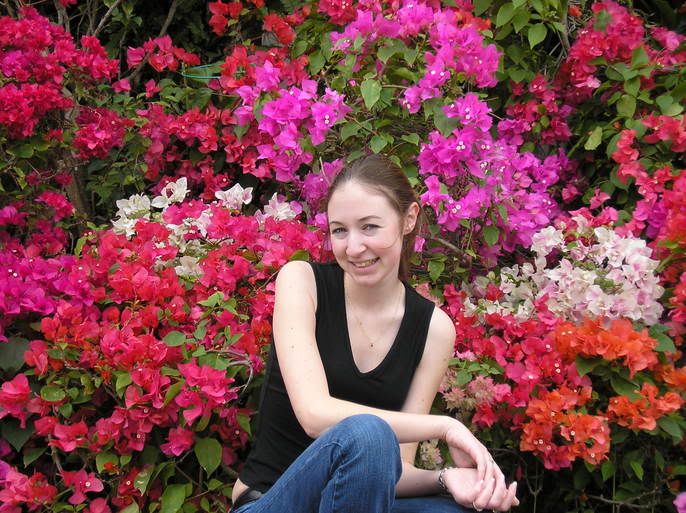
 (Clarification: The tree in the picture is NOT the giant tree.)
Ohhh how cute! A little shrine hidden between the buildings! I called for Peter to come with me. This is what we found at the end of the alley:
 Huh. Perhaps I underestimated a bit.
It was a full blown Buddhist temple complex. There was a massive temple along with several administrative buildings, cloisters, and live monks!
 (Cloisters - at least, I think that's what these were)
Well no, actually, the signs neglected to mention the fact that a famous shogun who united most of central Japan committed suicide on this site after one of his generals betrayed him. Google provided that information later. That guy was named Nobunaga, and I believe that this is his grave (although nothing was labeled in English):
 There were numerous other graves behind the temple, but this was the largest. There were also lots of wooden sticks with writing on them. I have no idea what they meant, but they were pretty, and if anyone knows what these mean I would appreciate enlightenment.
The temple held more surprises, unfortunately I do not have pictures because photography was not permitted. Unsure whether tourists were allowed in the main temple building, I snuck up the stairs to peek in the windows.
 In retrospect, taking a picture of me sneaking up the stairs next to the red sign that I can't read probably wasn't wise. But when I looked in the windows, there were English signs telling tourists not to take photos. We decided that meant it was ok to go inside. The inside of the temple was almost solid gold!! There was a massive statue of Buddha in the center, with all kinds of treasure stacked around it. The altar was draped with heavily embroidered, expensive looking brocade. Three massive drums at the back of the room made me wish I could see a ceremony at the temple. It took my breath away.
We later found the temple on a map - it is called Honnoji. More photos tomorrow!!
 In retrospect, taking a picture of me sneaking up the stairs next to the red sign that I can't read probably wasn't wise. But when I looked in the windows, there were English signs telling tourists not to take photos. We decided that meant it was ok to go inside. The inside of the temple was almost solid gold!! There was a massive statue of Buddha in the center, with all kinds of treasure stacked around it. The altar was draped with heavily embroidered, expensive looking brocade. Three massive drums at the back of the room made me wish I could see a ceremony at the temple. It took my breath away.
We later found the temple on a map - it is called Honnoji. More photos tomorrow!!

No comments:
Post a Comment